Viking dishwasher repair
Viking Dishwasher Repair That Starts With a Test Cycle
Water left in the tub, grit on the glasses, a puddle under the door — a Viking dishwasher usually has one part misbehaving, and a diagnostic cycle run while we watch shows which one. Naperville Kitchen Repair Co. fixes Viking dishwashers throughout our seven-town area; the visit costs $89 and that amount comes off the repair.
Rated 4.9 out of 5 by 231 reviewers Reviews
On this page · 5 sections
Burner 1 of 3 · quick answer
Why is my Viking dishwasher not draining?
Either something blocks the drain path or the pump has given up. Look first at the filter in the tub floor; after that the suspects are a kinked or packed drain hose, a plugged disposal connection under the sink, or a pump you can hear humming while nothing leaves the tub. Rinsing the filter is safe; if water still sits, call a technician.
Water, grit, puddles: what the dishwasher shows you
Each sign below narrows the search to a handful of parts. We confirm the real cause in your kitchen before quoting anything.
- Glasses come out cloudy, or plates still carry dried food
- Spray arm jets plugged with seeds, labels or glass chips; a filter nobody has rinsed in months; an inlet valve letting in too little water for the arms to throw it upward
- A pool of water waits in the bottom when the cycle ends
- A packed filter, a sagging or pinched drain hose, food lodged where the hose meets the sink plumbing, or a tired drain pump
- A puddle by the door, or water seeping from below the toe kick
- A door gasket that's flattened or split, a supply or drain connection that has loosened, or an inlet valve that keeps dripping after it should have closed
- The door won't latch, or nothing starts once it's shut
- A worn latch, or a door switch that no longer tells the controls the door is closed
The detergent is rarely the culprit
-
HeardIf the dishes come out dirty, switch to a stronger detergent.
In practiceSoap changes the result less than people expect. When a Viking dishwasher stops cleaning, the reason is usually mechanical: spray arms that no longer spin freely, jets blocked by debris, a filter coated in grease, or a fill that comes up short so the top rack never gets properly soaked.
-
HeardA little water left in the tub is just how these machines work.
In practiceA small amount below the filter is part of the design. Water standing above the filter once the cycle has finished is not — and that water is what turns into the smell people notice a few days later.
-
HeardRinsing every plate spotless before loading keeps the machine healthy.
In practiceHeavy pre-rinsing hides a weak pump or a blocked arm until a messier load exposes it. Scraping off big scraps and keeping the filter clean does far more for the dishwasher than running the tap over every fork.
Burner 2 of 3 · quick answer
Why are my dishes still dirty in my Viking dishwasher?
Most often the water isn't hitting the dishes hard enough. Make sure both spray arms turn by hand and their holes are clear, rinse the filter, and check that tall pans aren't blocking an arm. If loads still come out gritty after that, the water supply or the circulation side of the machine needs testing on site.
What the diagnostic cycle shows us
We don't start by swapping parts and hoping. A dishwasher gives its fault away most clearly while it runs, so the visit follows the water from fill to drain.
-
Run a test cycle and watch it
Pausing between stages, we see how quickly the tub fills, whether both spray arms turn, where water escapes and how the pump sounds when it tries to empty the tub.
-
Open up what the cycle pointed to
Filter and sump, spray arms, drain hose routing, the inlet valve and its supply line, the door gasket and latch, and the connections hidden behind the lower panel.
-
Talk it through first
We tell you in plain words what failed and put the estimate in writing. No part goes in without your OK, and your $89 visit charge counts toward the bill.
-
Repair, then run it again
The faulty part is fixed or replaced with OEM-compatible components — spray arms, drain pump, door seal or latch, inlet valve — and a second full cycle runs on the spot.
-
Prove the drain and the wash
Before we pack up, the tub empties completely, the floor stays dry and the dishes in the test load come out clean.
Things you can do before we arrive
None of this needs tools, and each step makes the visit quicker.
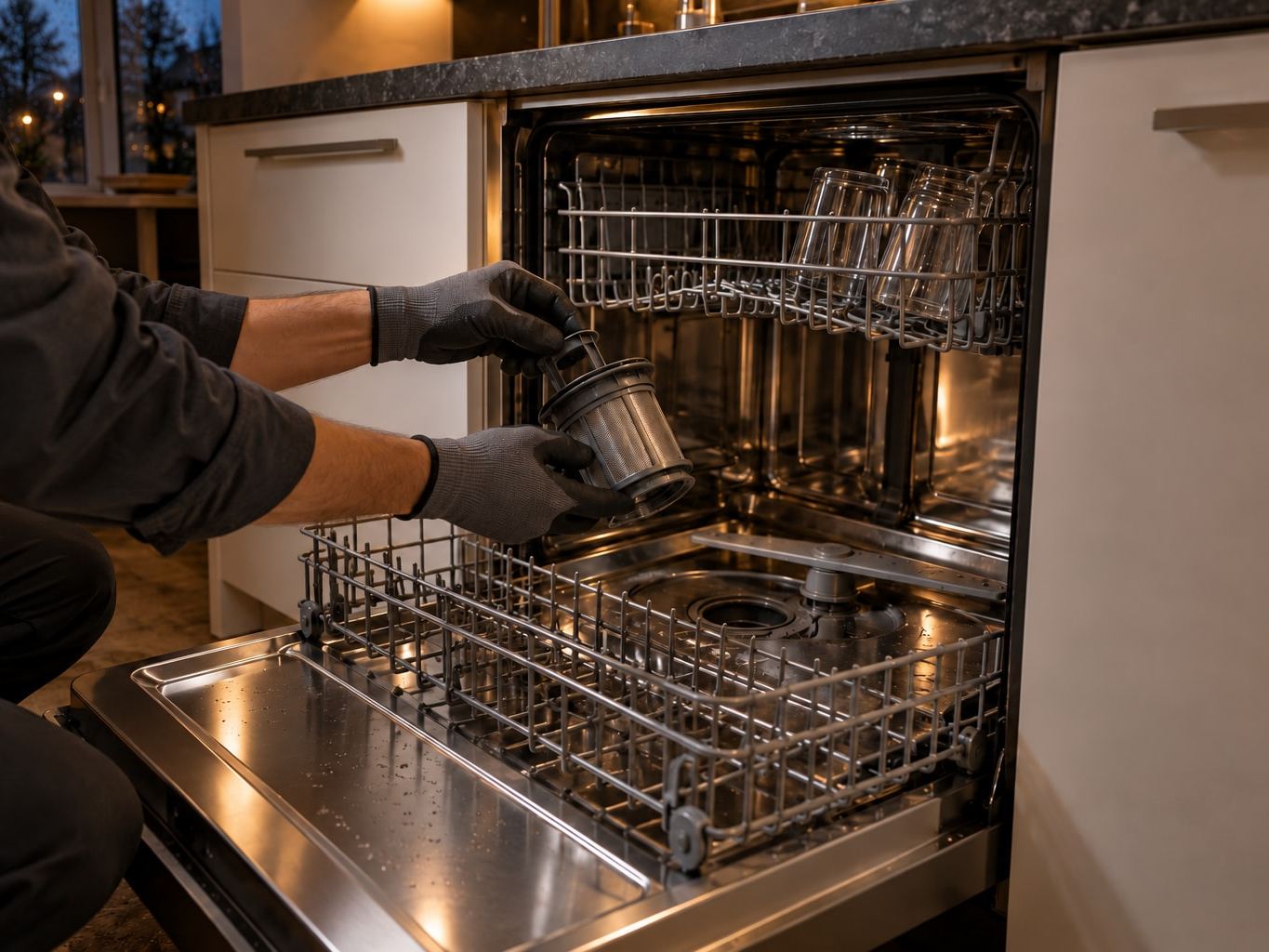
- Pull out the lower rack, twist the filter free and rinse it under the tap — many drain and odor complaints start right there.
- When the leak reaches the floor, shut the supply valve for the dishwasher — usually under the sink — as long as you can get to it without standing in water.
- Soak up the puddle with towels so it doesn't creep under the cabinets or into wood flooring.
- Water near an outlet or the wiring under the sink? Leave that corner alone and keep everyone back until the technician arrives.
- Skip the extra cycle 'just to see' — a leaking machine adds more water every time it runs.
- Jot down what you saw: which cycle, where the water appeared, any new noise. It tells the technician where to begin.
- Empty the sink base cabinet and move rugs or stools away from the dishwasher so its lower panel and supply line are easy to reach.
- Keep small children away from a wet floor and an open door with hot racks; our notes on a kid-safe Viking kitchen cover the rest.
Burner 3 of 3 · quick answer
Is a Viking dishwasher leaking on the floor urgent?
Yes. Water that escapes the tub soaks into the subfloor and the cabinets beside the machine, and the damage spreads where you can't see it. Stop using the dishwasher, close its water supply under the sink if that's safe, dry the floor and call — leaks get moved up in the schedule.
What owners ask about their Viking dishwashers
- What stops a Viking dishwasher from smelling?
- Rinse the filter often, scrape plates before they go in, and wipe the door gasket and the bottom edge of the door now and then. Running the kitchen tap until it's hot before you start a cycle helps too. If the smell comes back within days, water is probably sitting in the tub — a drain issue worth a visit.
- My Viking dishwasher door is shut but the cycle won't begin — why?
- Usually the latch or the door switch. If the controls don't register a closed door, the cycle won't begin. Look for anything stopping the door from closing fully — a utensil handle, a rack off its track. If it still won't latch, the latch assembly needs replacing.
- Is it OK to run the dishwasher while I wait for the visit?
- If it just cleans poorly, yes, though results won't get better. If it leaks, won't drain or trips the breaker, stop. Each run of a leaking machine puts more water on the floor, and a pump that can't drain is working against itself.
- How do I clean the filter in a Viking dishwasher?
- Pull out the lower rack, twist the filter assembly out of the tub floor and rinse it under warm running water with a soft brush. Do not use anything sharp on the fine mesh. Seat it back until it locks, because a filter that sits loose lets debris reach the pump. Your owner's manual shows the exact layout for your model.
Dishwasher leaking or full of water?
Phone (872) 268-8090 at any hour (24/7) or reserve a slot online; house calls run 8 AM–6 PM daily. Rather ask a question first? Other ways to get in touch are on the contact page.
$89 per visit, not per appliance; approve the fix and that trip charge melts into the repair price instead of sitting on top of it.